
This Week in M&A Issue #261
 November 2, 2026
Hello!
Today’s trend of the week is “romance books”. 📚
Romance novels are booming, with readers falling in love with printed books again.
According to Inc., more than 230 romance bookstores have opened in the US over the past three years, with around 335 opening worldwide. Much of this growth has been driven by TikTok’s #BookTok community, which has introduced romance novels to a whole new generation of readers.
And the sales figures show just how popular the genre has become. Romance print book sales were up 24% year-over-year in 2025, based on year-to-date figures.
Independent publishers are getting in on the action, too. An analysis found that 59% of Amazon’s top 100 Kindle romance bestsellers in 2025 were self-published.
That’s encouraging news for Amazon KDP publishers looking to tap into the trend. Popular subgenres like romantasy (romance mixed with fantasy), sports romance, historical romance, and supernatural romance offer plenty of opportunities to reach niche audiences.
Today we have for you:
- ‘Poisoned’ Google search results are skewing SEO data
- Average ecommerce conversion rates
And:
- Shoppers order from Amazon more than any other retailer
- Amazon tests live chat between sellers and shoppers
- Empire Flippers at DCBKK 2026
Alright, let’s dive in.

Image Source: Giphy
Google’s “Poisoned” Search Results Are Misleading SEO Tools
If you use SEO tools like Semrush or Ahrefs to track your site’s Google rankings, your latest reports might not be entirely accurate.
Semrush has confirmed that Google is returning inaccurate search results to many automated SEO tools, making websites appear to rank higher or lower than they actually do.
These are being called “poisoned search results.”
Essentially, SEO tools are seeing different Google results from regular users. Some results are completely irrelevant, while others look normal but include unrelated websites further down the page.
For example, a Google search in Brazil for a specific baby stroller returned a dental equipment supplier simply because both products shared the same Portuguese word.
And the problem is more widespread than you might think.
An analysis by Nozzle examined 56.1 million Google search results pages across 53 countries and found that 22.6% of the results checked across the first two pages showed signs of inaccurate rankings.
Other SEO platforms are reporting similar issues:
- Ahrefs: Estimates that 5% to 20% of results are affected, depending on the data provider.
- SEOmonitor: Reported inaccurate or incomplete data in approximately 8% of its daily results.
- DemandSphere: Flagged 6.7% of collected search results as suspicious on October 23.
Google hasn’t officially explained what’s happening, but SEO providers suspect it may be related to efforts to stop automated data collection, particularly by AI companies.
So what does this mean for online business owners?
If your SEO tools suddenly report a major ranking drop, don’t rush to change your website or SEO strategy.
Instead, compare the data with Google Search Console and check whether your organic traffic has actually dropped.
Your rankings might be fine. It could simply be your SEO tool that’s getting things wrong.
ecommerce
Ecommerce Conversion Rates: How Does Your Store Compare?
How many people who visit an online store actually make a purchase?
According to Exploding Topics, the average ecommerce conversion rate is 2.68%. That means roughly 3 out of every 100 visitors make a purchase.
For Shopify stores, the median conversion rate is even lower at 1.4%. However, the top 20% of Shopify stores convert more than 2.7% of sessions, while the top 10% exceed 3.5%.
Conversion rates also vary significantly depending on what you’re selling.
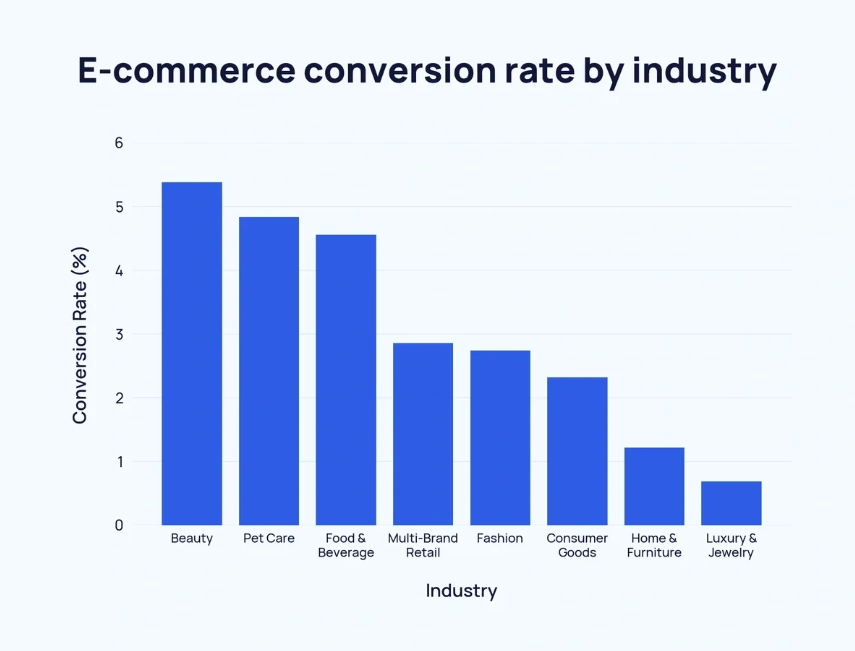
Beauty and personal care products have the highest average conversion rate at 5.38%, followed by pet care (4.84%) and food and beverages (4.56%). Luxury and jewelry stores have the lowest at just 0.69%.
This makes sense. Shoppers are generally more willing to make quick purchases on affordable, everyday products than expensive items that require more consideration.
Interestingly, AI is becoming a valuable source of customers. In July 2026, shoppers arriving at US retail websites through AI assistants converted 60% better than visitors from other sources. Revenue per visit was also 53% higher.
Mobile shopping is another important area for ecommerce entrepreneurs. Mobile devices accounted for 76% of ecommerce traffic in September 2026, making mobile-friendly websites and simple checkouts increasingly important.
But getting shoppers onto your website is only half the challenge. The report found that around 70% to 82% of online shopping carts are abandoned before checkout.
The biggest reasons include:
- Unexpected shipping costs, taxes, and fees (40%)
- Slow delivery (20%)
- Concerns about payment security (19%)
- Mandatory account creation (18%)
- Complicated checkout processes (17%)
For ecommerce business owners, these figures offer a useful way to compare their store’s performance against industry averages.
eCommerce

US Shoppers Buy From Amazon More Often Than Any Other Online Retailer
Amazon isn’t just the biggest ecommerce retailer in the US. It’s also the platform shoppers return to most frequently.
According to ECDB, the average Amazon customer places 22 orders per year, or roughly one order every 17 days. That’s significantly more than any of its major competitors.
Walmart comes closest, with customers placing around 15 orders annually. eBay shoppers order fewer than 11 times a year, while Target customers make just five purchases.
Even specialist retailers struggle to keep up. Pet supply retailer Chewy averages seven orders per customer annually, while Home Depot averages just four.
So, why do shoppers keep coming back to Amazon?
Convenience is a big factor. Amazon Prime offers free shipping on eligible purchases, while same-day and next-day delivery make ordering everyday essentials incredibly easy.
Amazon’s huge product selection also means customers can buy almost everything they need in one place.
For ecommerce entrepreneurs, this is one of the biggest advantages of selling on Amazon.
Amazon sellers have access to millions of customers who already shop on the platform regularly. Instead of having to attract every customer themselves, their products can be discovered by shoppers who are already looking to buy.
Shopify merchants don’t have that same advantage. They need to bring customers to their websites through advertising, SEO, social media, and other marketing channels.
Of course, Shopify gives business owners more control over their branding and customer relationships. But merchants who sell exclusively through Shopify miss out on Amazon’s existing customer base and frequent purchasing activity.
For Shopify store owners, expanding to Amazon could be a great way to reach more customers and generate additional sales without relying entirely on their own marketing efforts.
Read All About It!
💡 9 million-dollar business ideas in 56 minutes: My First Million brainstorm
🔢 Free SaaS calculators: valuations, MRR, churn, LTV, and more
📈 California startups raise more in 2026 than the US ever has: in a single year
📱 This first-time builder grew his app into a $50k pm business: in just 6 months
Amazon
Amazon Experiments With Real-Time Chat for Sellers and Shoppers
Amazon is testing a new live chat feature between sellers and shoppers.
According to PPC Land, some sellers have noticed a new “Enable Real-Time Chat” setting in Seller Central.
When switched on, sellers appear online and can chat directly with shoppers in real time. This would allow shoppers to get answers while they’re still deciding whether to buy.
For example, someone unsure about a product’s sizing, compatibility, or customization options could get an immediate answer rather than leaving the listing to look elsewhere.
This could be good news for Amazon sellers. A quick answer could mean the difference between making a sale and losing a customer, especially when sellers pay for that traffic through Amazon Ads.
The conversations could also reveal useful information about what customers want to know. If the same questions keep coming up, sellers can use that feedback to improve their product descriptions and images.
However, there are downsides. Live chat means customers may expect immediate responses, adding more work for sellers who already have plenty to manage.
This could be particularly challenging for solopreneurs and small businesses that don’t have the staff to stay online throughout the day, and for international sellers working across different time zones.
For now, Amazon is only testing the feature, and several details are still unknown. Amazon hasn’t confirmed who can access it, how shoppers will start conversations, or whether sellers will face any penalties for missing messages.
It’s also unclear whether Amazon plans to roll out live chat more widely.
Events

Empire Flippers at DCBKK 2026!
Last week, we sponsored the DCBKK conference in Bangkok, where we had the chance to connect with fellow entrepreneurs, business owners, and some great people in the online business community.
Representing Empire Flippers were Ben Gelsey, our Director of Engineering, and Francisco Juarraro, our Director of Sales.
We learned a lot from the attendees, who shared their experiences of growing online businesses in today’s market, the challenges they’re facing, and some clever strategies they’re using to stay ahead of the competition.
Francisco also hosted a workshop for attendees, sharing the latest online business industry stats, tips on making your business more attractive to buyers, and what to look for when buying an online business.
If you’re thinking about buying or selling an online business, Francisco is a great person to have in your LinkedIn network.
Whether you’re planning your next acquisition, preparing your business for sale, or simply want to stay up to date with what’s happening in the industry, we’d love for you to connect with Francisco on LinkedIn and say hello!
Money Nomad

Looking for a side hustle?
Try Money Nomad, our sister marketplace built specifically for profitable side hustles and micro-businesses that are too small for Empire Flippers.
Check out this recent listing available on the Money Nomad Marketplace:
Listing #10054 – $13,000.00
display ads, digital product | home & garden
The Organized Mama is a turnkey home organization lifestyle brand monetizing through Mediavine ads, digital products, affiliate partnerships, and a podcast. The business includes an evergreen content library, existing email funnels, a private Facebook community, and multiple revenue streams ready for reactivation and growth. Learn More
Subscribe to the This Week in M&A Newsletter
to Get Content like This in Your Inbox Every Friday
