
This Week in M&A Issue #236
 May 11, 2026
Howdy partner 🤠
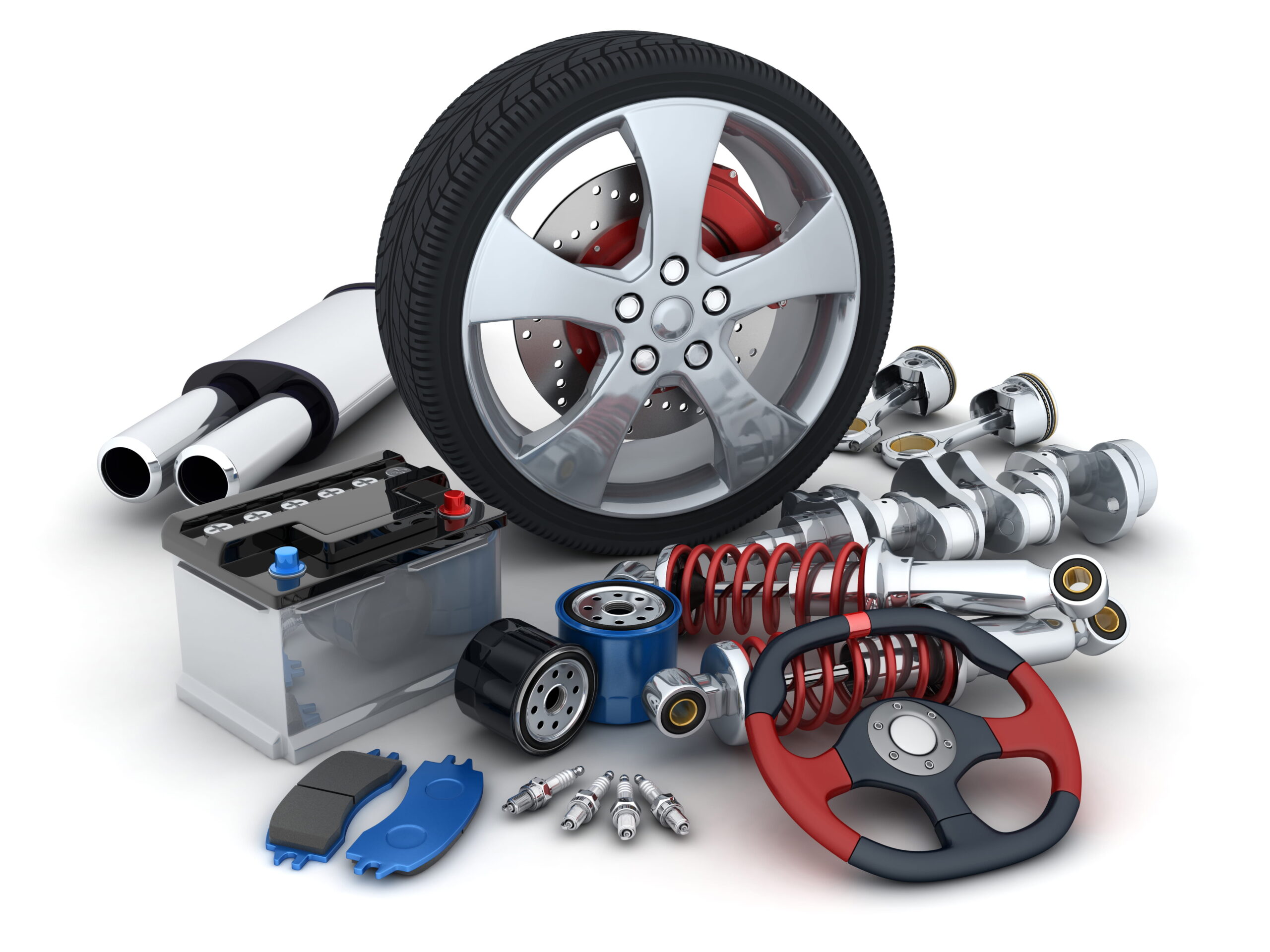
Today’s trend of the week is “motor vehicle parts”.
Car owners are buying more car parts online. The main driver is cost, with many people looking to save money by buying parts and doing repairs themselves instead of going to a mechanic.
Engine parts bring in the highest value per sale, but the real volume is in everyday items. In 2024 alone, Shopify merchants sold over 70 million wheel parts, which shows just how big demand has become.
Accessories are also taking off. Dashboard products grew 140% year on year, and items like dash cams get more than 100,000 searches every month. Searches for magsafe phone mounts and car diffusers are also getting more popular as people look for simple upgrades that make driving easier and more enjoyable.
You can sell these products and pair them with helpful content like tutorials or YouTube guides to help customers solve problems, build trust, and keep them coming back.
Today we have for you:
- Amazon just opened its logistics network to everyone
- More Amazon sellers are hitting $1M
And:
- ChatGPT ads just got a lot more accessible
- Rewriting the paid ads playbook
- Ask .com is officially closing its search engine
Alright, let’s dive in.
Amazon

Image Source: Giphy (Amazon)
Amazon Is Turning Its Logistics Engine Into a Business
Amazon is opening up one of its biggest strengths to other businesses.
It has launched Amazon Supply Chain Services, which gives companies access to its logistics network, even if they don’t sell on Amazon.
For years, Amazon built this network to serve itself and its sellers. Now it is packaging that capability as a standalone service. Businesses can now use one system for freight, warehousing, inventory, fulfillment, and last mile delivery.
This is not just for ecommerce brands. Amazon is going after industries like manufacturing, healthcare, automotive, and retail. Companies can move everything from raw materials to finished goods using the same infrastructure Amazon relies on.
Behind this launch is decades of investment. Amazon has built a global logistics system with planes, trucks, warehouses, and software that coordinates everything at scale. Now it’s trying to monetize that system, similar to how it turned its internal tech into AWS.
Strategically, this puts Amazon in direct competition with logistics giants like UPS and FedEx. The market reacted quickly, with logistics stocks dropping after the announcement.
There is also some skepticism. Amazon previously launched a similar service in 2023 that struggled to gain traction. Analysts are watching closely to see what has changed and whether this version can win larger enterprise clients.
So far, it’s a success, with major brands including Procter & Gamble, 3M, Lands’ End, and American Eagle already using the service.
For business owners, this creates a new option. Instead of stitching together multiple providers, you can plug into a single system that handles the entire flow of goods.
Amazon
New Amazon Report Shows Big Wins for Small Sellers
Amazon just released its 2025 Small Business Empowerment Report, and the numbers are looking good for third-party sellers.
In 2025, more than 75,000 independent sellers generated over $1 million in annual sales on Amazon, a 36% increase year over year. Average annual revenue for U.S. sellers rose to more than $375,000, up nearly 30%. More than 11,000 sellers grew their businesses by over 10x in a single year.
Independent sellers now account for over 60% of all sales on Amazon, reinforcing the idea that the marketplace is increasingly driven by small and medium-sized businesses rather than first-party retail.
A big reason for this growth is AI. Amazon has rolled out tools that help sellers create listings, improve pricing, and spot demand much faster. In 2025 alone, sellers used these tools to create more than 12 million product listings.
Amazon’s AI-powered Seller Assistant is also gaining traction, with over 230,000 monthly users. Sellers follow its suggestions about 90% of the time, which shows how useful it has become in day-to-day operations.
Fulfillment is the other major advantage. With Fulfillment by Amazon, sellers can offer fast shipping and reach customers globally without building their own logistics network. In 2025, U.S. sellers exported more than 580 million products.
These businesses supported over 2 million jobs in the U.S. alone, while Amazon expanded financing, education, and IP protection programs to lower barriers to entry and scale.
If you’re already selling on Amazon, this is a reminder that the tools are getting better and the ceiling is getting higher. If you’re just getting started, it’s a sign that the barrier to entry is lower than it used to be. The opportunity is there, but competition is rising, so execution still matters.
Ads
OpenAI Just Made ChatGPT Ads More Accessible to Smaller Businesses
Advertising in ChatGPT just got a whole lot more accessible.
The biggest change is that the $50,000 minimum spend is gone. In its place, OpenAI has launched a self-serve ads manager (currently in beta), where U.S. advertisers of all sizes can apply for access. If approved, you can run campaigns directly, upload creatives, set budgets, control pacing, and track performance without going through a partner.
They’ve also made the pricing more flexible. Originally, ads were sold on a CPM basis at $60 per 1,000 impressions. Now, you can choose between CPM (focused on reach) or CPC (focused on clicks). For CPC campaigns, OpenAI suggests starting bids between $3 and $5. The system runs on a relevance-based, second-price auction, so better-matched ads can win without always paying the highest bid.
Tracking has improved too. There’s now a Conversions API and pixel support, so you can measure actions like sign-ups, leads, and purchases. Reporting includes impressions, clicks, spend, CTR, CPC, CPM, and conversions, along with export options and UTM tracking.
Ad targeting works differently from traditional search. Instead of keywords, ads are matched to conversations based on context, your ad creative, and your landing page. They appear below responses and are clearly labeled.
OpenAI says ads do not influence ChatGPT’s answers. Ads currently run for Free and Go users in the U.S., Canada, Australia, and New Zealand, excluding Plus, Pro, Business plans, and users under 18.
It’s still early, but this is the first real chance to test ads inside ChatGPT without a huge upfront commitment. If you like getting in before a channel gets crowded, this is worth keeping on your radar.
Read All About It!
🧲 How to 7X your newsletter growth with a quiz funnel: lead magnet
📍 Shopify local SEO tactics to rank higher: boost your rankings
🧰 The Hustle’s business startup kit: 9 templates for business planning
🚀 This app made $120K in 24 hours before it was even finished: launch playbook
The Opportunity podcast
![Rewriting the Paid Ads Playbook With Hernan Vazquez [Ep.211] (1)](https://1745913.fs1.hubspotusercontent-na1.net/hubfs/1745913/Rewriting%20the%20Paid%20Ads%20Playbook%20With%20Hernan%20Vazquez%20%5BEp.211%5D%20(1).png)
The Real Reason Your Paid Ads Aren’t Working
Most paid ads don’t fail overnight. They slowly drain your budget while convincing you everything is “almost working.”
In the latest episode of The Opportunity podcast, we are joined by Hernan Vazquez, a paid ads expert with over a decade of experience.
Hernan breaks down why so many online business owners are spending more on paid ads and seeing worse results. The strategies that used to work aren’t holding up anymore, but many business owners haven’t adjusted.
We get into what’s actually changed, from rising costs to how platforms now rely more on creative than targeting. As a result, more businesses are shifting to low-ticket offers and building full funnel ecosystems instead of relying on a single campaign.
If your ads feel unpredictable, expensive, or just harder than they should be, this episode will help you understand why, and what to rethink before you pour more money into them.
Search
Ask Jeeves Is Officially Shutting Down After Nearly 30 Years
One of the web’s longest-running search brands has gone dark.
Ask.com, originally launched as Ask Jeeves in the late 1990s, officially closed on May 1, 2026 after nearly three decades online. The company confirmed the shutdown in a message on its homepage, saying parent company IAC decided to discontinue its search business as part of a broader shift in focus.
Ask.com’s homepage now carries a farewell message thanking users, engineers, and employees who supported the platform over the years, adding that “Jeeves’ spirit endures.”
Ask Jeeves launched before Google became dominant, but it struggled to compete once Google turned search into a faster, cleaner, algorithm-driven experience. IAC acquired the company in 2005 and rebranded it as Ask.com in 2006. By 2010, the company had already scaled back its own search technology and shifted toward a question-and-answer format.
For a lot of early internet users, Ask Jeeves stood out because it let people type full questions instead of just keywords. Long before AI chatbots existed, users could ask things like “How do I fix a leaky faucet?” or “What are the best restaurants in Rome?” in natural language.
Modern search is moving back toward conversational interfaces through AI products like ChatGPT, Gemini, and AI-powered search summaries. In many ways, Ask.com was trying to build that experience almost 30 years ago. The technology was just not ready yet.
Ask.com may not have survived the search wars, but many of the ideas behind it ended up shaping the next generation of search anyway. Farewell Jeeves.
Money Nomad
.png)
Looking for a side hustle?
Try Money Nomad, our sister marketplace built specifically for profitable side hustles and micro-businesses that are too small for Empire Flippers.
Check out this recent listing available on the Money Nomad Marketplace:
Listing #10088 – Open to Offers
General E-commerce, Amazon FBA | Pets & Animals
Black Swift is an established U.S. Amazon FBA private-label brand in the pet niche, generating $5,219/month in revenue and $1,212/month in profit. With validated products, optimized listings, and Brand Registry protection, the foundation is built for a buyer to scale through deeper inventory investment and expanded product lines. Learn More
Subscribe to the This Week in M&A Newsletter
to Get Content like This in Your Inbox Every Friday
