
This Week in M&A Issue #207
 October 20, 2025

Greetings, guys and ghouls!
Today’s trend of the week is “Google Frightgeist”. 👻
Google’s annual Frightgeist has once again revealed what’s haunting everyone’s search history this Halloween.
The 2025 list of top costume trends blends nostalgia, pop culture, and a dash of viral chaos, led by “KPop Demon Hunters” characters Rumi, Zoey, and Mira, who have soared to the top after the film’s record-breaking Netflix debut. Meanwhile, Labubu dolls are back from the early 2010s, proving that cute-creepy is still in demand.
Beyond costumes, Frightgeist highlights the enduring reign of the 12-foot skeleton in Halloween décor, the rise of “dill pickle candy corn” (yes, really), and a shift in party themes toward an ethereal “Enchanted Forest” vibe. Las Vegas also takes the crown as the top Halloween destination of 2025.
For online business owners, these Frightgeist insights are pure gold. Ecommerce sellers can jump on trending products and themed bundles, while bloggers and YouTubers can create DIY tutorials, costume guides, and décor inspiration.
Today we have for you:
- Walmart teams up with OpenAI to bring shopping into ChatGPT
- Crawl budget optimization is the key to AI-era revenue growth
And:
- Amazon to raise FBA fulfillment fees in 2026
- How to earn six figures without buying or selling a business
- Thrasio’s rise and fall: Lessons from the Amazon aggregator boom
Alright, let’s dive in.
eCommerce
-Oct-16-2025-06-48-23-1901-PM.gif)
Image Source: Giphy (emojitheiconicbrand)
Walmart Stock Soars as ChatGPT Becomes Its New Shopping Assistant
Walmart has partnered with OpenAI to let customers shop directly through ChatGPT using the AI platform’s new Instant Checkout feature. The news sent Walmart’s stock surging 5% to a record high.
Through ChatGPT, customers can now browse and buy items conversationally, turning the chatbot into a personal shopping assistant that makes purchasing as easy as sending a message.
It’s a major leap forward in Walmart’s AI strategy, and helps to close the tech gap with Amazon. Analysts say the move could help Walmart reach a $1 trillion market valuation, joining the ranks of Apple, Microsoft, and Amazon.
This collaboration expands on Walmart’s existing AI initiatives, including its in-app assistant “Sparky,” which uses generative AI to recommend products, summarize reviews, and help users find what they need faster.
Walmart joins a wave of major retailers embracing AI through OpenAI partnerships. Etsy and Shopify recently launched similar integrations, letting users discover and buy products directly through ChatGPT conversations.
The early numbers suggest growing momentum. According to SimilarWeb, Walmart’s ChatGPT referrals jumped from 9.5% in August to 15% in September. While that still represents less than 1% of Walmart’s total web traffic, it highlights how conversational commerce is starting to take shape.
By combining its massive retail ecosystem with OpenAI’s powerful language model, Walmart is opening new doors for marketplace sellers. The integration gives sellers a fresh way to reach customers, get their products in front of new audiences, and tap into the growing wave of AI-driven discovery inside ChatGPT.
SEO & GEO
Why Your Crawl Budget is Eroding Your Revenue
As AI-driven search tools like ChatGPT reshape how people find information, many websites are quietly losing revenue. This isn’t because users have stopped searching on Google, but because their most valuable pages are going unseen by both search and AI crawlers.
Between May 2024 and May 2025, AI crawler traffic jumped by 96%, with OpenAI’s GPTBot accounting for nearly a third of it. Yet, data from Semrush shows that users aren’t abandoning Google. Instead, they’re expanding their search habits across platforms. This means websites must now satisfy both traditional and AI crawlers without increasing their crawl budgets.
The problem is that most companies focus on how many pages get crawled instead of which pages should be crawled. Cloudflare found that AI bots like Claude’s crawl tens of thousands of pages for every single referral click they generate, consuming resources while sending little traffic in return.
According to Search Engine Land, the solution lies in strategic prioritization, ensuring crawlers focus on pages that actually drive revenue.
A helpful model is the PAVE framework, which evaluates pages by Potential, Authority, Value, and Evolution. Pages that rank low on these factors waste crawl budget that could be directed toward high-value, conversion-oriented content.
Another major factor is technical setup. Sites relying heavily on JavaScript face a “9x rendering tax” since most AI crawlers skip JavaScript altogether. Server-side rendering (SSR), where pages are pre-built in HTML before loading, not only improves crawlability but also boosts site speed. Deloitte found that even a 0.1-second faster load time can lift retail conversions by 8.4%.
Crawl budgets shift with every deployment, so continuous monitoring is essential. Unifying crawl data with SEO and AI visibility metrics gives you a real-time view of what’s actually working.
Since both Google and AI crawlers currently decide what gets seen, businesses that ensure their most valuable pages are fast, visible, and crawlable will win more clicks, customers, and revenue.
Amazon
Amazon Fulfillment Fee Change Announced
Amazon is set to raise fulfillment fees for independent sellers starting next year, marking the first increase after no changes in 2025.
According to an official blog post on October 15, U.S. Referral and Fulfillment by Amazon (FBA) fees will go up by an average of $0.08 per unit sold. Sellers will have at least 90 days’ notice before the new rates take effect.
Dharmesh Mehta, Amazon’s VP of worldwide selling partner services, emphasized that these fee adjustments are below inflation and smaller than the 3.9%-5.9% cost increases seen from major U.S. carriers over the past two years. He also reassured sellers that no new FBA fee types will be introduced in 2026, signaling Amazon’s goal of minimizing operational burdens while maintaining stability.
Despite these assurances, many sellers are raising concerns. This announcement comes at a time when Amazon sellers are already facing record-high advertising costs, potential looming tariffs, and rising storage fees. Some sellers also point out that Amazon added three to five new fee types earlier this year, which has compounded operational expenses and made planning for profitability more challenging.
For independent sellers, even small fee increases can affect margins, especially when combined with advertising and storage costs. Sellers are advised to use Amazon’s tools, like the revenue calculator, fee preview reports, and profit analytics dashboards, to model the impact of these changes on individual products and adjust pricing or strategies accordingly.
Read All About It!
💸 200+ ways to make money with AI: AI-powered income ideas
🖥️ Build sites fast with new WordPress vibe coding tool: 10Web AI site builder
💬 28 AI prompts & templates for SEO: save hours of manual work
🏷️ Black Friday Cyber Monday guide for eCommerce: Admetrics 150-page playbook
YouTube
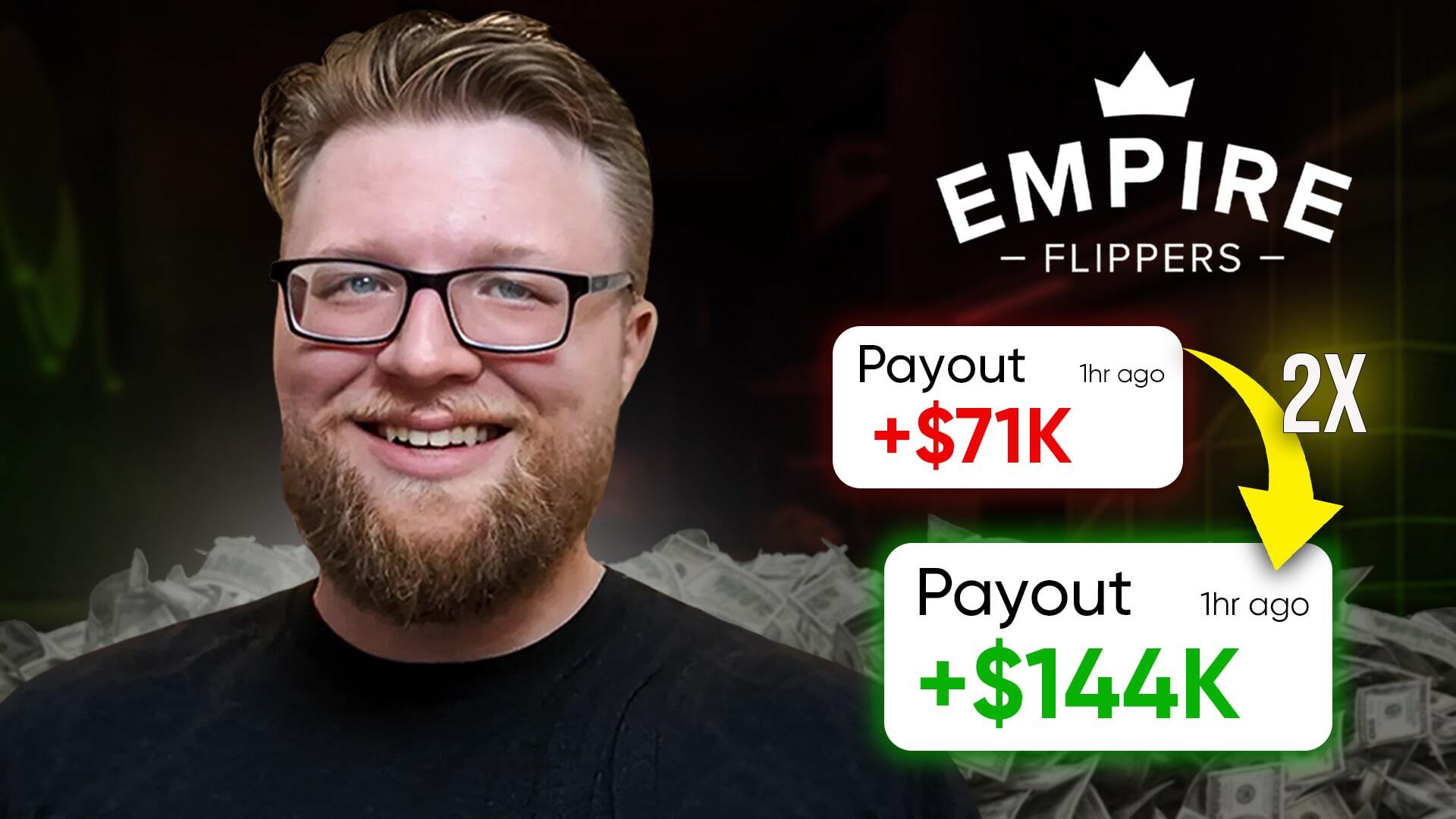
Our Referral Program Could Be Your 6-Figure Opportunity
What if you could earn six figures in the M&A world this year, without ever buying or selling a business?
Sounds too good to be true, right? It’s not.
In this week’s video, Greg breaks down what we believe is the best affiliate program in the world (and okay, we might be a little biased): the Empire Flippers referral program.
He dives into how the program works, why it’s such a powerful opportunity, and shares real success stories from referral partners who’ve earned massive commissions, including one who made $80K from a single referral.
If you’re looking for a way to tap into the booming online business marketplace and get rewarded for making great connections, you won’t want to miss this one.
M&A
The $3 Billion Lesson: Why Thrasio Collapsed and What Comes Next
Marketplace Pulse recently released a fascinating “Amazon aggregator autopsy” in the aftermath of Thrasio’s collapse.
In a recent interview, Thrasio co-founder John Hefter shared the first insider account of what went wrong. The strategy of buying and growing Amazon brands works in principle, but operational inefficiencies and the extreme conditions of 2021 made success nearly impossible.
Thrasio started smart, acquiring businesses at reasonable 2x EBITDA multiples. But by 2021, competition was fierce, and the company was paying 7x for low-quality brands just to hit growth targets. Easy money and sky-high valuations fueled a frenzy, with over 100 aggregators competing for the same assets. Aggregators raised $12.3 billion in 2021, mostly debt, but that dropped to $2.7 billion in 2022, leaving many overextended and vulnerable.
Speed made things worse. Thrasio grew from four founders to 1,600 employees across ten global offices in just two and a half years, acquiring 200 brands, sometimes multiple deals per week. Errors, such as ordering massive amounts of slow-moving inventory, proved costly and nearly impossible to correct. Operational excellence became critical, and many aggregators simply couldn’t keep up.
Despite the chaos, roll-ups still work. Software aggregators serving Amazon sellers, like Threecolts and Carbon6, reached nine-figure valuations, proving that consolidation can succeed with the right asset class and strategy.
Hefter believes future success is possible at lower multiples with better infrastructure, but the bar has risen. Amazon sellers have become more sophisticated, making execution and discipline more important than capital alone.
Thrasio’s story is a warning: buying and growing multiple brands can work, but moving too fast, overpaying, or running operations poorly can ruin even the best strategies.
Money Nomad

Looking for a side hustle?
Try Money Nomad, our sister marketplace built specifically for profitable side hustles and micro-businesses that are too small for Empire Flippers.
Check out this recent listing available on the Money Nomad Marketplace:
Listing M20124 – Open to Offers
eCommerce | Pet Care
This Toronto-based eCommerce retailer specialises in fashion-forward, luxury dog beds for style-conscious pet owners. The brand has built a strong presence across the US and Canada, offering products that combine premium comfort with design-led aesthetics. With a loyal customer base and positive reviews, the business is well-positioned in the growing pet goods market. The product range has been developed to appeal to both pet lovers and home décor enthusiasts, making it a standout choice in a competitive niche. Learn More
Subscribe to the This Week in M&A Newsletter
to Get Content like This in Your Inbox Every Friday
