
This Week in M&A Issue #202
 September 15, 2025
Hello friends!
Today’s trend of the week is “craft kits”. 🎨
As the weather turns colder and drives people indoors, DIY arts and crafts are seeing a major upswing.
Shopify data shared by Retail Brew shows a surge in orders for creative essentials. Craft sets jumped 483% in August, doll-making kits rose 251%, felting pads and mats climbed 108%, and art and drafting tables increased 63%. Even search interest is spiking, with the term “craft set” receiving 30,000 searches last month, up 21% year-over-year.
This growing demand highlights a big opportunity for online business owners. Personalized DIY craft kits are especially popular, offering consumers a ready-made mix of materials and instructions to create unique projects. From knitting and jewelry making to woodworking and painting, these kits appeal to a wide audience, from hobbyists looking to relax to parents seeking engaging activities for kids.
The trend offers multiple angles: curating niche kits, offering subscription boxes, or targeting the gifting market with customizable sets. You can also publish crafting tutorials on your blog or YouTube channel. Crafting challenges also have a knack for taking off on social media, so use those hashtags to your advantage!
Today we have for you:
- The rise of Amazon’s single-SKU millionaires
- Facebook Ad costs rise but still outperform Google
And:
- Why personal brands suck
- How to sell your side hustle for $100K+
- Amazon vanishes from Google Shopping
Alright, let’s dive in.
Amazon

Image Source: Giphy (Judge Judy)
800+ Amazon Sellers Prove a Single Product Can Hit $1 Million
According to MarketplacePulse, over 800 Amazon sellers earn more than $1 million each year by focusing on a single product, with 19 of them generating over $10 million from just one SKU.
Out of roughly 50,000 million-dollar sellers in the U.S., only 1.6% of them, or 0.15% of all active sellers, operate with a single product, showing just how exceptional this achievement is.
The single-product approach offers a lean, highly focused business model: sellers can maximize revenue while keeping operations simple. Amazon’s enormous reach, 2.8 billion monthly visits, gives even one product unmatched exposure and discovery opportunities compared with traditional retail.
But this focus comes with risk. Algorithm changes, new competitors, supply chain issues, or regulatory shifts can threaten an entire business overnight. Nearly 500 single-product millionaires fall in the $1–2 million range, where growth or diversification often becomes essential for survival.
Some sellers manage risk by subtly diversifying. Many supplement their main product by selling additional lines directly to Amazon as first-party sellers, combining the benefits of a single-product focus with extra revenue streams. Larger Amazon aggregators, like Thrasio, have historically preferred acquiring brands with multiple SKUs, diversifying at the portfolio level, though this approach has faced challenges in recent years.
Geography also provides advantages: nearly three-quarters of single-product millionaires operate from China, leveraging manufacturing proximity, government export subsidies, and years of platform experience.
These 800+ sellers demonstrate that in a marketplace overflowing with choices, concentrated focus can still yield extraordinary results.
The Opportunity podcast
![Why Personal Brands Suck [Ep.188]](https://1745913.fs1.hubspotusercontent-na1.net/hubfs/1745913/Why%20Personal%20Brands%20Suck%20%5BEp.188%5D.png)
The Power and Pitfalls of Personal Branding
Personal brands are all the rage, marketed as the ultimate path to business growth and success. But what if the very thing that makes you stand out is also what’s keeping your business from scaling, or worse, from selling?
In this week’s podcast episode, Greg Elfrink dives into the hidden downsides of personal branding, breaking down Alex Hormozi’s journey to show both the power and the pitfalls of building around a personality.
If you’re scaling with the hope of freedom or a future exit, you’ll want to hear why buyers often see personal brands as a liability, and how that could hurt your valuation.
PPC
Traffic Up, Leads Down for Facebook Advertisers
Facebook advertising costs are on the rise in 2025, but the platform continues to outperform Google when it comes to lead generation costs.
New benchmark data from WordStream LocaliQ shows that the average cost per lead (CPL) on Facebook jumped 21% year over year to $27.66. Despite this increase, it remains far cheaper than Google, where the average CPL is $70.11.
Traffic campaigns on Facebook are proving especially efficient. Click-through rates (CTR) improved to 1.71%, up from 1.57% in 2024, with Shopping, Collectibles, and Gifts performing best at 4.13%. Costs per click (CPC) also fell by nearly 7% to $0.70, with the lowest costs seen in shopping-related categories.
Lead campaigns, however, are showing signs of strain. CTR held steady at 2.59%, but conversion rates slipped to 7.72% from 8.67% last year. Costs per lead rose significantly across many industries, with dentists facing the steepest average CPL at $76.71, while restaurants and food saw the lowest at just $3.16.
The data shows a clear split: traffic campaigns are becoming cheaper and more effective, while lead campaigns are growing more costly and less reliable. Analysts attribute this to rising competition, inflation, and shifting consumer behavior as tighter household budgets weigh on industries like home improvement and personal care.
For advertisers and business owners, the outcome is that generating awareness through traffic campaigns is more cost-efficient than ever, but lead ads now demand more strategic effort.
Success now requires careful targeting, sharper creatives, and a focus on lead quality rather than volume.
Read All About It!
🔍The state of SEO 2026: what’s working in SEO today
🎙️ Top entrepreneurship podcasts: successful entrepreneur insights
🤖 Create your own Android Bot with new tool: Androidify
⚖️ PubMatic sues Google over monopoly violations: seeking billions in damages
YouTube
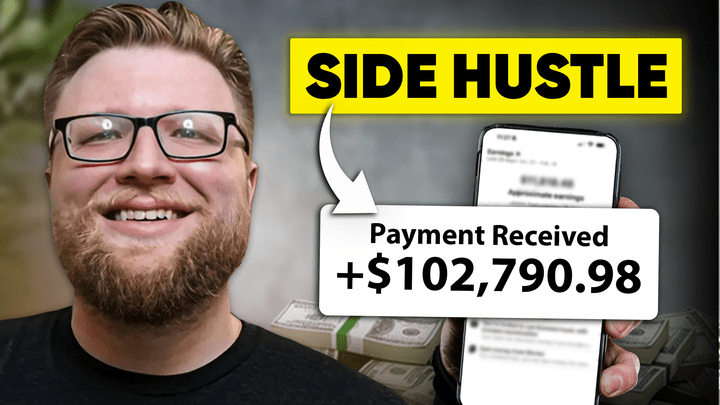
From Side Hustle to Payday: The Power of Small Exits
You don’t need a Silicon Valley–style exit to change your life. Selling a small side hustle can be just as powerful.
In fact, smaller businesses often come with surprising advantages. They’re usually more attractive to buyers, easier to manage, and sell much faster than larger, more complex operations.
In this video, Greg explains why buyers are so drawn to small businesses, the profit multiples you should be aiming for, and how you can position yourself to become what he calls an “unofficial Empire Flippers millionaire.”
If you’ve ever wondered whether your side hustle could turn into a serious payday, this is a video you won’t want to miss.
Amazon
From 429K to Zero: Amazon’s Overnight Disappearance from Google Shopping
According to new data from Audience Key, Amazon’s organic visibility in Google Shopping has dropped sharply, and by mid-August, Amazon vanished entirely from the organic product grids in the U.S.
The decline began after two major changes: Amazon stopped running paid Shopping ads and consolidated its three merchant store names (“Amazon,” “Amazon.com,” and “Amazon.com – Seller”) into one.
Before these updates, Amazon products appeared in nearly 429,000 organic product cards. After July 25, that number fell to just under 295,000, a 31% drop. Some categories were hit especially hard: apparel visibility fell by more than 50%, while home goods and laptops saw declines of 36–45%. Even smaller segments, like tires and indoor décor, showed losses.
For sellers, the impact is twofold. With Amazon less visible, products that relied on Google-driven clicks could see reduced traffic and sales. At the same time, this creates an opening for smaller brands and third-party sellers. Competitors that optimize their listings, improve reviews, and keep prices competitive may now capture traffic that once went straight to Amazon.
It’s not yet clear whether Amazon’s disappearance is temporary or part of a larger strategy. The company recently restarted Google Shopping ads, but only in international markets, not in the U.S.
In the meantime, sellers should take steps to reduce reliance on Amazon’s organic presence. Running their own Google Ads or social media campaigns, investing in SEO, and even building direct-to-consumer sales channels can help maintain visibility.
Money Nomad
Looking for a side hustle?
Try Money Nomad, our sister marketplace built specifically for profitable side hustles and micro-businesses that are too small for Empire Flippers.
Check out this recent listing available on the Money Nomad Marketplace:
Listing M20118 – Open to Offers
eCommerce, Amazon FBA | pet care
This is a well-established pet product brand offering premium-quality dog diapers and belly bands, proudly manufactured in the USA for over 40 years. The business has built a loyal customer base thanks to its exceptional product durability, repeat buyers, and longstanding reputation in the pet care niche. Operating with minimal overhead and scalable from a home setup, the business currently sells via Shopify and Amazon, with significant untapped growth potential through marketing and retail expansion. The high-quality, made-in-America positioning sets it apart from mass-produced competitors in a rapidly growing industry. Learn More
Subscribe to the This Week in M&A Newsletter
to Get Content like This in Your Inbox Every Friday
