
Lead Gen Business Model: Pros, Cons & How It Works
 Updated on November 16, 2026

A lead gen business earns a fee for every qualified lead it sends to a client company, usually a form fill or a phone call, so it gets paid without selling a product or holding stock. This guide explains how the model makes money, its pros and cons, and how lead gen sites are valued, bought and sold, based on 2,688 deals closed on the Empire Flippers marketplace.
What Is a Lead Gen Business?
A lead gen business finds people who want a product or service and passes their details to a company that sells it. The company pays for each qualified lead and does the selling itself.
Clients range from colleges and insurance firms to a local dentist or carpet cleaner. Most online lead gen businesses are websites that rank in local search or run paid ads, and capture leads with a form or a tracked phone number. The three common types are:
- Local lead gen: pages built around one service in one area, such as plumbers or dentists in a city. Leads go to one or a few local businesses.
- B2B lead gen: contacts at companies, such as demo requests or quote requests, for firms that sell to other businesses.
- High-value consumer offers: insurance, legal, medical, finance and education, where one new customer is worth a lot to the client.

How a Lead Gen Business Makes Money
You earn money each time a lead meets the client’s definition of qualified. No sale has to happen: the lead only shares their details or makes a call.
Each program sets its own rules. Some count a lead only after two forms are filled out, and pay-per-call programs often count a call that lasts at least 30 seconds. The main payment models are:
| Payment model | How you earn | Usually paid by | What has to move at a sale |
|---|---|---|---|
| Pay per lead | A fixed fee for each qualified form fill | Lead networks or direct clients | Network account or client agreement |
| Pay per call | A fee for each qualified phone call | Call networks such as Ring Partner, or direct clients | Call tracking numbers and network account |
| Monthly retainer (rent the site) | A flat monthly fee from one business for all leads from a site or page | Direct local clients | Each client’s agreement to keep paying the new owner |
Networks such as Quinstreet, Campus Explorer and Ring Partner offer dozens of ready-made offers. Selling direct to local businesses usually pays more per lead, but you have to find the clients, invoice them and collect payment yourself.
Pros of the Lead Gen Business Model
Lead gen can be lucrative, and fairly passive once a site ranks and leads arrive from organic search.
- High value per lead: in insurance, legal, medical and finance, a single lead can pay more than an affiliate commission on a sale.
- No product, stock or fulfilment: the client handles the sale, delivery and customer service.
- Less competition in local search: a page for one service in one city competes with far fewer sites than a national topic.
- Every location is a new market: the same offer can be repeated across towns and cities.
- Two ways to earn: use lead networks for simple payouts, or sell direct to local businesses for higher fees.
- Replaceable clients: if a direct client stops paying, the site still owns the traffic and can send leads to a new client. A client-service business loses that income.
If you plan to sell later, sites paid by lead networks are usually easier to sell. Direct-client sites often earn more but need a clear plan to hand clients over (see selling a lead gen site).
Cons and Risks of the Lead Gen Business Model
The model depends on traffic that matches the offer and on clients who keep paying.
- Traffic must be highly targeted: a visitor in the wrong city, or with the wrong need, is worth nothing to the client. Hyperlocal pages bring less traffic but convert far better.
- Payment risk with direct clients: a client who pays late or stops paying cuts earnings at once.
- Client concentration: if one client or one network pays most of the income, losing it can cut profit sharply.
- Fewer offers: there are far fewer lead offers than display ad or Amazon affiliate options, which limits choice in small local markets.
- Harder to transfer: direct clients must agree to work with the new owner, and some may leave during the handover.
- Data rules: forms and calls collect contact details, so consent and privacy rules in the client’s market apply.
Lead Gen vs Affiliate and Content Sites
Lead gen and affiliate sites both send visitors to another company, but they get paid at different points and carry different risks.
| Lead gen site | Affiliate or content site | |
|---|---|---|
| Paid when | A visitor becomes a qualified lead or call | A visitor buys, or views and clicks ads |
| Typical traffic | Local and service searches with high intent | Reviews, guides and informational searches |
| Who pays | Lead networks or direct clients | Merchants, affiliate programs or ad networks |
| Main risk | Client payment and client concentration | Commission cuts and search ranking changes |
| What moves at a sale | Network accounts, call tracking, client agreements | Affiliate and ad accounts, domain and content |
Compare it with the affiliate marketing business model, the AdSense business model and the Amazon affiliate business model.
How to Value a Lead Gen Business
Empire Flippers prices online businesses with one formula: 12 months of total net profit multiplied by a multiple that usually ranges from 1.7 to 5 or more. For a lead gen business, these points move the multiple:
- Length and stability of earnings: more months of steady profit support a higher multiple.
- Traffic sources: buyers check where leads come from; more than one stable source lowers risk.
- Client and network spread: income spread across several clients or networks is safer than one large payer.
- Proof of earnings: payouts that can be checked in network dashboards or the payment processor.
- Ease of transfer: written client agreements and call tracking that move cleanly to a new owner.
For the full method, read how to value a lead generation business, or get an estimate in minutes with our free valuation tool.
Sell your Business Free Valuation
What to Check Before Buying a Lead Gen Business
The most important check is whether the traffic matches the offer. Untargeted traffic produces leads that clients reject or will not pay for, which is why many lead gen sites focus on local and hyperlocal searches.
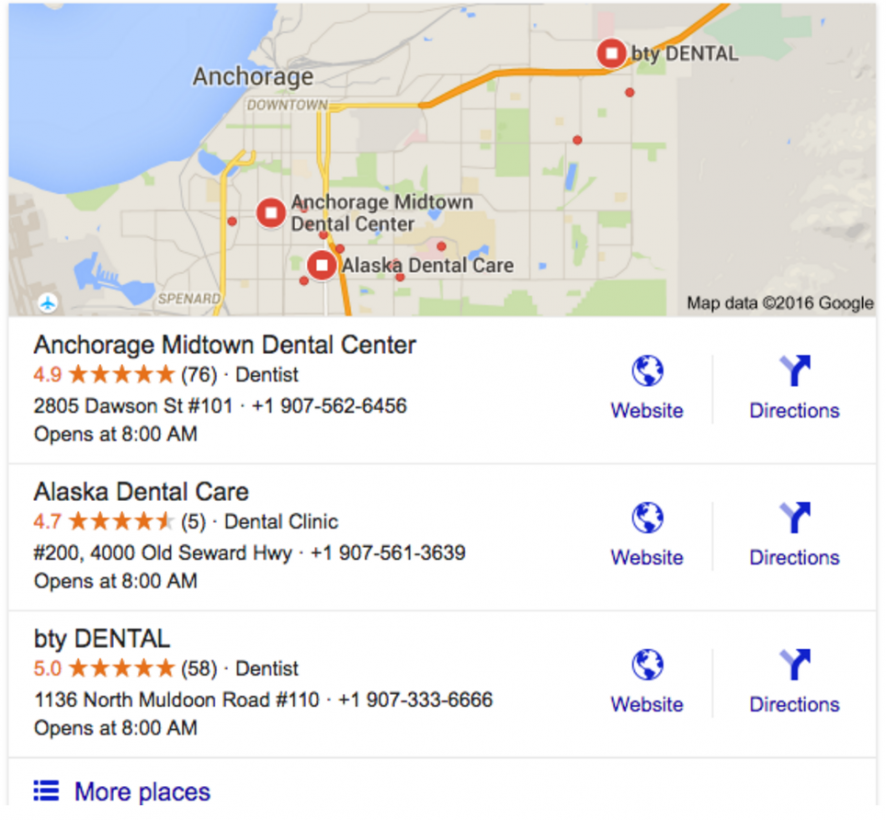
For instance, you can take advantage of getting listed in Google Maps’ 3-Pack. The Google Map’s 3-Pack appears above the main organic search results for local keywords. Often people will click on these listings before any other listings to either get directions to the business or to give the business a call to create an appointment.
If you’re unfamiliar with what the 3-Pack looks like, here is a quick example for dentists in Anchorage, Alaska:
Local searches also mean less competition, and every town or city becomes its own market for the same offer. Before you buy, check:
- Lead quality: how many leads each client or network accepts and pays for, and any rejected or returned leads.
- Proof of payouts: log in to the network dashboards or payment processor and match payouts to the profit and loss statement.
- Client agreements: who the clients are, how they pay, notice periods, and whether they will keep working with a new owner.
- Traffic health: where leads come from and how stable each source is. Use our SEO due diligence questions.
- Room to grow: locations and related offers the site does not cover yet.
Payment terms can be part of the deal too: see our guide to deal structures for online business sales. To compare live deals, browse lead gen businesses for sale.
What Sellers Need Before Listing a Lead Gen Site
Lead gen sites earn differently from ad and Amazon sites, which makes them attractive to buyers who want to diversify their income. To sell through Empire Flippers, your business needs:
- At least $24,000 per year in net profit
- At least 12 months of revenue and earnings history
- If income comes from direct clients: more than 50% of it from multiple clients
- Proof of earnings: buyers or our vetting team log in to your networks and payment processors to verify income
If clients pay you directly, write a transfer plan before you list: which clients will continue, how invoices and payments move to the buyer, and who owns the forms and call tracking numbers.
Our success fee is a flat $10,000 on sales up to $70,000 and 15% on sales up to $700,000, with lower rates above that (see the commission calculator). Get a free valuation first, because most sellers overvalue their business and end up with an inflated commission estimate. The average time to sale is 131 days. When you are ready, sell your lead gen business with us.
Who Buys Lead Gen Businesses?
Lead gen sites suit most types of buyer, for different reasons:
- Agencies and strategic buyers add lead gen sites to grow an existing marketing or service business.
- Portfolio and lifestyle investors prefer sites paid by lead networks, so they do not have to manage client relationships.
- Hands-on operators look for sites they can grow by adding locations and offers, and are open to direct-client models.
How to Grow a Lead Gen Business
Most lead gen sites have clear room to grow after a sale. These are the three main levers.
Run Local Paid Traffic
Local paid ads often face little competition, especially in smaller towns. An owner who runs paid traffic well can add leads quickly without waiting for rankings.
Add Pages for New Locations
Few lead gen sites cover every area an offer serves. Find the towns and cities you do not cover and build pages for them. Some sites grow so large they become directories, especially when they work with direct clients.
Add Related Offers
Add a second offer that fits the same visitors to your existing pages. It does not have to be local: a site that generates leads for colleges could also promote online courses.
Lead Gen Business FAQs
How does a lead generation business work?
A lead generation business attracts people who need a product or service, collects their details or a phone call, and passes them to a company that pays a fee for each qualified lead. The client does the selling. Most online lead gen businesses use websites that rank for local service searches or run paid ads, with a form or tracked phone number on each page.
Is a lead generation business profitable?
It can be, because it earns per lead without holding stock or handling sales. Profit depends on the payout per lead, the share of leads clients accept and the cost of traffic. In insurance, legal, medical and finance, one lead can pay more than an affiliate commission on a sale. On Empire Flippers, businesses list at 1.7 to 5 or more times their 12-month net profit, so steady profit also builds sale value.
Is lead generation legal?
Yes, lead generation is a legal business model. Because it collects contact details, you must follow the consent, privacy and telemarketing rules of each market you work in, and make clear on every form who will contact the visitor. Empire Flippers does not list businesses in prohibited categories such as payday loans or gambling.
What is the difference between local and B2B lead gen?
Local lead gen sends consumer leads to businesses in one area, such as dentists or plumbers in a city, and often relies on local search and the Google Maps 3-Pack. B2B lead gen generates contacts at companies for firms that sell to other businesses, such as software or wholesale suppliers. B2B sales take longer, so clients judge those leads on fit more than volume.
How do lead gen businesses get clients?
They either join lead networks that already have buyers for leads, or sell direct to businesses that want more customers. Networks such as Quinstreet, Campus Explorer and Ring Partner offer ready-made offers and pay per lead or per call. Direct deals usually pay more, but the owner must find clients, agree on what counts as a qualified lead and collect payment.
How are lead gen businesses valued?
Empire Flippers values them like other online businesses: 12 months of total net profit times a multiple, usually 1.7 to 5 or more. The multiple rises with a longer, steadier earnings history, more than one stable traffic source, income spread across several clients or networks, and earnings that can be verified. See how to value a lead generation business or try the free valuation tool.
What are the biggest risks in a lead gen business?
The biggest risks are losing a major client or network, clients who stop paying, and a drop in targeted traffic. There are fewer offers than for ad or Amazon sites, so replacing a lost offer can take time. Direct-client sites also carry handover risk at a sale, because each client must agree to keep working with the new owner.
What makes a lead gen business sellable?
A lead gen business is sellable when its earnings can be verified, its income is not tied to one client, and its clients and tracking can move to a new owner. To list on Empire Flippers, you need at least 12 months of earnings and at least $24,000 per year in net profit. Sites paid by lead networks are usually easier to transfer than sites with direct clients.
How do buyers judge lead quality in due diligence?
Buyers judge lead quality by how many leads clients accept and pay for, not by lead volume. Ask for acceptance and rejection rates by client or network, payout history from the network dashboards, and the source of each lead. Then check traffic health with our SEO due diligence questions.
Should you start or buy a lead gen business?
Buy if you want income from day one; start if you have time to build traffic and win clients yourself. A listed lead gen business already has traffic, clients or network offers, and a profit history reviewed by our vetting team. Browse lead gen businesses for sale to compare prices and multiples.
When should a lead gen owner think about selling?
Consider selling once the business has at least 12 months of steady profit, clean records and a clear plan to transfer clients. Those are the points buyers check first, and they support a higher multiple. The average time to sale on Empire Flippers is 131 days, so start preparing early, and get a free valuation to see where you stand.

Discussion
Hi,
I followed the trailed to Local Client Takeover, which when you click ‘buy the course’ takes you to JV Zoo, which is a whole other internet marketing thing, with no continuation or link back to LCT.
Who is doing what here? I am confused by what products are being represented and by whom. I’m looking for a solid lead gen educational product.
Cheers
Jonno
Hey Jonno,
If you’re looking for a solid lead gen education product, I would recommend Local Client Takeover or The Lab. Either will suit you fine.
You can reach out to Mark Luckenbaugh in his Local Client Takeover group on facebook